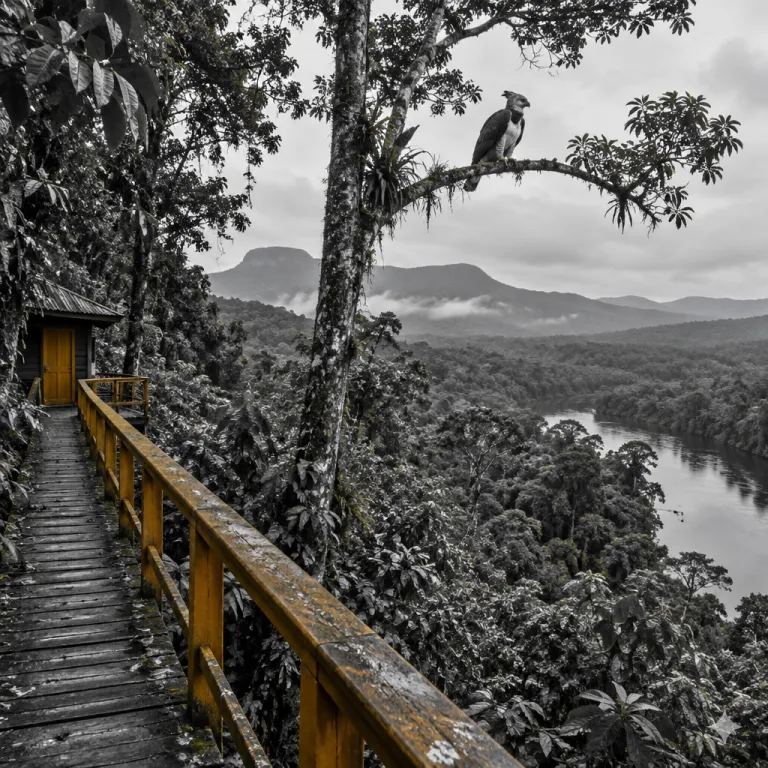
Why the harpy eagle makes Guyana’s Kanuku Mountains worth the detour
The harpy eagle is the raptor that justifies a long haul to Guyana. In the quiet canopies of the Kanuku Mountains and the Iwokrama Forest, this near-threatened species rules a green world where most visitors will never set foot. For a solo explorer planning a luxury stay, travelling to see harpy eagles in southern Guyana is less a checklist item and more a pilgrimage.
Think of the harpy eagle as South America’s apex forest hunter, with talons the size of a child’s hand and a presence that silences other birds. In this remote area of southern Guyana, harpy eagles still patrol intact forest, helped by mountains protected as a formal conservation area and by community-led wildlife initiatives. When you book a high-end lodge here, you are buying into that conservation management story as much as a comfortable bed.
Kanuku is not the obvious first stop for birding in Guyana, which often begins around Georgetown or Kaieteur. Yet the Kanuku Mountains sit at the heart of the Guiana Shield, a vast block of ancient rock whose forest and river systems shelter some of the region’s most intact protected areas. For travelers who care about a single great sighting more than a packed itinerary, focusing on harpy eagles in the Kanuku range is where ambition and ethics can align.
Harpy eagles rely on enormous emergent trees, often a silk cotton or similar giant, to hold a nest that may be used for several seasons. Guides in this area know which cotton tree or silk cotton has hosted a nesting site in recent years, and they work with local conservation teams to monitor any active nest. That collaboration between lodges, communities and the national tourism authority helps keep both the species and the experience protected.
When you weigh destinations, remember that not all forest areas are equal for this bird. The Kanuku Mountains, designated as a protected area within Guyana, combine lowland forest, ridges and river corridors that suit harpy eagles at multiple life stages. That mix of habitats, plus relatively low visitor numbers, makes this southern Guyana stronghold a compelling alternative to more trafficked birding areas in South America.
Building a harpy focused itinerary: where to stay and how guides work
Luxury in the Kanuku Mountains is not chandeliers and marble, but a well-run lodge with strong guiding and reliable boats on the river. For a harpy eagle focused trip, choose a property that markets serious birding in Guyana rather than generic wildlife tours. The best lodges understand that searching for harpy eagles in the Kanuku foothills demands early starts, long walks and honest conversations about nesting chances.
Ask directly how guides locate any current nesting site and how far it is from the lodge. Responsible operators will explain that an active harpy eagle nest in a protected area is approached only from a safe distance, with strict limits on group size and time spent near the birds. They should also reference coordination with the Guyana Tourism Authority and the relevant government structures that oversee wildlife conservation standards.
In practice, a harpy focused day might start before dawn with a boat ride along a forest-lined river, scanning for macaws, toucans and other bird species as the light comes up. Your guide will listen for alarm calls from smaller birds, which sometimes betray the presence of the huge forest eagle Guyana is famous for, circling above the canopy. If a known nest is within reach, expect a hike through forest areas that can be hot, muddy and deeply rewarding.
Because harpy eagles use the same nesting site for several seasons, local conservation management teams keep careful notes on each nest tree. When you book, ask whether any silk cotton or other cotton tree is currently active and how recently guides have seen the birds. For more context on how to base yourself for raptors and other predators, see this guide to where to stay in Guyana for jaguars, harpy eagles and canopy photography.
High-end properties in this area increasingly work with the Protected Areas Commission and other Guyana agencies that oversee national parks and tourism standards. That means your stay can support both local livelihoods and broader wildlife conservation goals, especially when lodges contribute data on harpy eagle nesting and other sensitive bird species. When comparing options, prioritize those that talk clearly about conservation, not just comfort, because a genuine harpy encounter in the Kanuku Mountains depends on both.
Kanuku versus the obvious: why this mountains and river landscape suits the solo birder
Most first-time visitors to Guyana aim straight for headline sites like Kaieteur Falls or the Iwokrama Forest. Those areas are spectacular, but the Kanuku Mountains offer a quieter, more concentrated mix of forest, savannah and river that suits a single species quest. For a solo explorer, that makes southern Guyana’s harpy eagle territory a more intimate stage for long days in the field.
The Kanuku Mountains rise gently from the Rupununi savannah, creating a mosaic of habitats that hold both forest birds and open country species. This transition zone is one reason birding specialists rate the area so highly, because you can move from river islands to dense forest and then to foothill trails within a single day. That variety increases your overall bird species count while you wait for the one eagle that matters most.
From a logistics perspective, Lethem and its surroundings have become a hub for lodge-based travelers who want comfort without losing proximity to the mountains. Several properties now offer air-conditioned rooms, good food and reliable transfers into the Kanuku protected areas, making it easier to balance field time with rest. For a deeper look at this shift, read about Lethem and the Kanuku Mountains as a rising lodge destination.
Ethically, the case for choosing the Kanuku Mountains over more obvious routes rests on pressure. Harpy eagles are a protected species across South America, and IUCN assessments highlight the importance of large, continuous forest for their long-term survival. By spreading tourism into less visited but formally protected landscapes like Kanuku, you help diversify income for communities while easing pressure on a few famous nesting areas.
For the solo traveler, there is also the question of atmosphere. Nights in a Kanuku lodge feel different from busier corridors, with only river sounds, forest insects and the occasional call of night birds carrying through the dark. If your idea of luxury is space, silence and the chance that a Guyana harpy might pass overhead at dawn, this is where the trade-off pays off.
Ethics at the nest: distance, patience and what to expect on site
Harpy eagle tourism lives or dies on how people behave near a nest. In the Kanuku Mountains, responsible guides treat every nesting site as a privilege, not a guarantee, and they will cancel a visit if the birds show stress. As a guest, your role is to accept that a harpy-focused Guyana itinerary is built on restraint as much as on sightings.
Expect to view any active nest from a carefully measured distance, often through a scope set up under the forest canopy. The nest tree, frequently a towering silk cotton or similar emergent, may be two hundred metres away across a ravine or above a river bend, which protects the birds from direct disturbance. You will likely spend long stretches standing quietly, watching one of the most powerful eagles in South America preen, feed or simply sit.
Guides and community monitors in this protected area often work with national wildlife conservation projects to track nesting cycles. They know when adults are incubating, when chicks hatch and when young harpy eagles begin to branch out from the nest, and they adjust visit schedules accordingly. That level of conservation management is one reason the Kanuku Mountains remain a stronghold for this species within Guyana.
Photography should never dictate how close you get to a bird. Serious birding operators in Guyana will brief you on no-flash rules, time limits and group sizes before you leave the lodge, and they will enforce those rules even if it means fewer images. If you feel pressure to move closer to a harpy eagle nest, you are with the wrong operator and should raise concerns with the Guyana Tourism Authority or the relevant tourism channels.
On days when the eagles stay hidden, guides will often pivot to other bird species and mammals that share the forest. You might track mixed flocks of canopy birds, scan river banks for giant otters or listen for the distant roar of howler monkeys echoing off the mountains. A journey into the Kanuku protected areas is about the whole forest mosaic, not just one dramatic bird.
Beyond the harpy: filling your Kanuku days with forest, river and community
Even the most focused raptor pilgrim needs more than one target to fill a week. The Kanuku Mountains and their surrounding river systems offer some of the richest birding and wildlife watching in Guyana, with forest areas that feel almost pre-contact in their quiet. When the harpy eagle stays elusive, the wider southern Guyana landscape steps forward.
Morning boat trips along blackwater creeks reveal kingfishers, herons and flocks of parrots commuting between roosts and feeding trees. As the sun climbs, you can shift to forest trails where antbirds, manakins and other specialist bird species work the understorey, while raptors circle above the mountains. Late afternoons often belong to the river again, when the light softens and the silhouettes of eagles, vultures and other large birds cross the sky.
Many lodges here are community owned or co-managed, which changes the feel of a luxury stay. The real asset is not the thread count but the guide who grew up fishing this river and now leads birding walks, or the manager who sits on a local conservation committee. For a deeper look at how this model works, see how village run lodges are training Guyana’s next generation of hosts.
These community partnerships often feed data back to the Protected Areas Commission and to Guyana Tourism bodies that promote sustainable travel. Over time, that loop strengthens both conservation management and the quality of guiding, especially for sensitive species like harpy eagles and other forest raptors. When you choose a lodge that invests in training and monitoring, your stay becomes part of a broader wildlife conservation effort across the Guiana Shield.
For the solo explorer, this means your days balance intense birding with real human connection. You might spend a morning scanning a cotton tree for a distant eagle, then an evening listening to stories about how the mountains’ protected status has changed hunting patterns and river use. In a world of crowded hotspots, a harpy-focused Kanuku journey offers something rarer than a checklist tick, which is time in a living protected area where birds, people and forest still share the same long view.
FAQ
How realistic is it to see a harpy eagle in the Kanuku Mountains ?
Seeing a harpy eagle in the Kanuku Mountains is possible but never guaranteed. Active nests shift over time, and guides rely on up-to-date information from community monitors and conservation teams. Plan several full days in the area to improve your chances and accept that the search is part of the experience.
What level of comfort can I expect from lodges in the Kanuku region ?
Lodges around the Kanuku Mountains are generally simple but comfortable, with private rooms, fans or air conditioning and good local food. The focus is on strong guiding, safe boats and proximity to forest and river habitats rather than on urban-style luxury. Ask each lodge about power, water and transfer logistics before booking to match your comfort needs.
Is visiting a harpy eagle nesting site safe for the birds ?
When managed correctly, visits to a harpy eagle nesting site can be compatible with wildlife conservation. Responsible operators keep visitors at a significant distance, limit group sizes and coordinate with conservation management teams to avoid sensitive periods. Always follow your guide’s instructions and avoid any operator who suggests moving closer than agreed viewing points.
When is the best time of year to plan a harpy focused trip to Guyana ?
Harpy eagles can be present year-round, but visibility improves when an active nest has a chick or large juvenile. Local guides and lodges know when recent nesting has occurred and can advise on current conditions. Rather than chasing a specific month, contact your chosen lodge for recent updates from the Kanuku Mountains before fixing dates.
How does my stay support protected areas and local communities in Guyana ?
Staying at community-linked lodges channels money into villages that help manage nearby protected areas and forest resources. Many properties contribute data on bird species, including harpy eagles, to national agencies and conservation projects across the Guiana Shield. By choosing these lodges and respecting guidelines, you support both livelihoods and long-term wildlife protection.
Sources
Guyana Tourism Authority ; Protected Areas Commission, Guyana ; International Union for Conservation of Nature (IUCN).