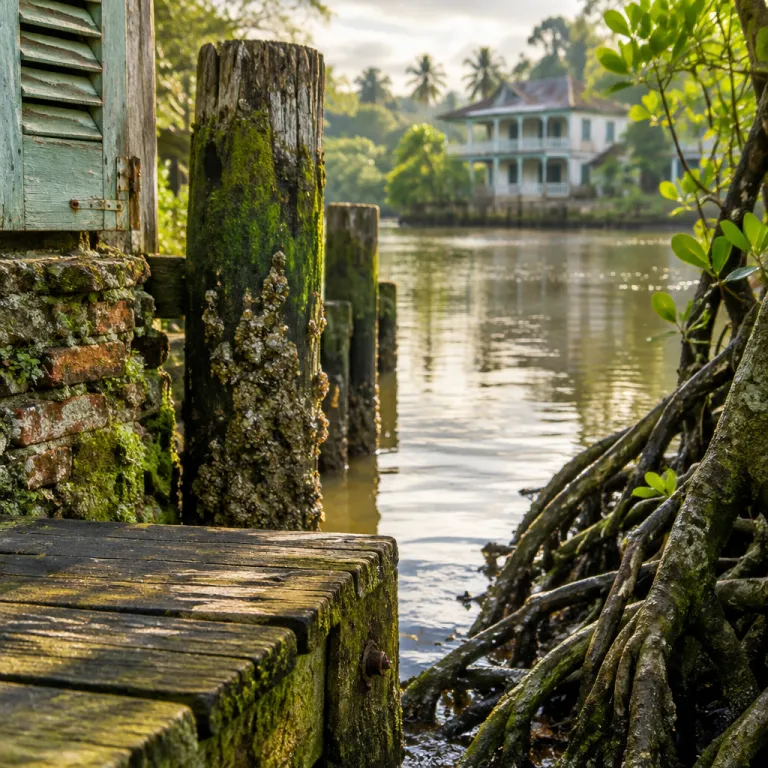
Why the Berbice feels different from Guyana’s headline rivers
The Berbice River in eastern Guyana moves at a quieter pace than the Essequibo or the Demerara. For a couple planning a refined Berbice itinerary, that slower rhythm translates into fewer crowds, more conversations and a sense of genuine welcome. You feel the difference as the road east from Georgetown thins, the air turns softer over the wide water and the dense forests on the horizon start to frame the journey rather than dominate it.
Most visitors can name the Demerara and maybe one or two other waterways, yet very few could point to the Berbice on a map. That anonymity is your luxury; it keeps the region largely in the hands of local families, small guesthouses and a handful of premium properties such as Grand Coastal Hotel New Amsterdam and Riverton Suites that share the river with working boats and public ferries rather than cruise ships. Here, river travel is still infrastructure first and leisure second, so your romantic escape folds into everyday life instead of sitting apart from it.
From the mouth of the Berbice near Crab Island to the inland bends near Edward Village, this bridge-linked corridor in eastern Guyana connects coastal settlements with interior communities. The water is wide but rarely rough, and the creeks that feed it carry stories of logging, rice, cattle and cross-border trade with Suriname. For couples who have already sailed the Essequibo or crossed the Demerara Harbour Bridge, a Berbice route offers a more intimate, low-key way to understand how rivers built Guyana and still quietly hold it together.
Crossing the Berbice Bridge and reading the eastern coast
The Berbice Bridge is where the narrative of eastern Guyana shifts from abstract map line to lived experience. Opened in 2008 as a vital link between Regions 5 and 6, it stretches for about 1.6 kilometres (just under a mile) across the river. As your car rolls toward the approach, the road narrows, the breeze freshens and the water opens into a broad, brown sweep that feels both industrial and strangely serene. Couples who care about the texture of a place, not just its views, will find this crossing a small but telling moment in their Berbice journey.
This is a toll bridge, and the fee for a standard car is modest by international standards yet meaningful for the local public who use it daily. At the time of writing, private cars pay around GYD 2,200–2,500 each way (roughly USD 10–12), with higher rates for minibuses and trucks; current tariffs are published by the Berbice Bridge Company and the Ministry of Public Works. Paying that toll is a reminder that in this region, rivers are not just scenery; they are arteries, and the bridge replaced a slower ferry service that once defined the pace of travel here. You still see remnants of that era in the waiting sheds, the old ramps and the way drivers talk about timing their crossings to the tides.
On either side of the bridge, the road threads through settlements that feel distinctly eastern Guyana rather than capital city Georgetown. You pass small shops that share river views with stilted houses, and you sense how the public works teams have slowly upgraded this corridor without erasing its character. For travelers interested in how communities run their own hospitality, it is worth reading about community-led hosting models in pieces such as how Guyana is training the next generation of community hosts, then watching how those ideas might quietly surface along the Berbice through homestays, family-run inns and locally guided drives.
New Amsterdam’s colonial bones and riverside rhythm
New Amsterdam sits just upriver from the mouth of the Berbice, a town where Dutch and British legacies still shape the streets. This is not a manicured heritage showpiece; instead, the river light falls on weathered wooden buildings, churches and civic halls that maintenance crews keep just functional enough for daily life. Couples who appreciate patina over polish will find that the town’s slow rhythm pairs well with a premium stay that values service, quiet and river views more than marble lobbies.
From the riverfront, you watch working boats move along the main channel, carrying goods toward Crab Island or further inland, while children play at the water’s edge. The waterways here are wide but human-scaled, and the dense forests that once hemmed in the settlement now sit as a distant green wall beyond the coastal plain. Walking the grid of streets, you sense how New Amsterdam once rivaled Georgetown, yet today it offers a more intimate stage for a romantic escape that still feels plugged into everyday Berbice life.
There is a quiet satisfaction in pairing a night or two here with time in more obviously polished river towns such as Bartica on the Essequibo, whose riverside elegance for discerning travelers is well documented in guides like this detailed look at Bartica’s riverside stays. In New Amsterdam, you trade that level of gloss for the chance to share verandas with local families, watch the light change over the bridge in the distance and hear stories of old sugar estates and river floods. For many couples, that balance between comfort and authenticity is precisely what makes a Berbice itinerary feel special.
Designing a slow, river led itinerary for couples
A thoughtful Berbice River journey starts with deciding how slowly you want to move. One option is to drive the coastal road from Georgetown, cross the bridge, base yourselves in New Amsterdam and then add day trips by water to explore upstream stretches of the river corridor. The drive from the capital to town usually takes around three to four hours, depending on traffic and stops, and the Ministry of Tourism and local tour operators can confirm current road conditions. Another option is to treat the Berbice as part of a wider circuit that also includes the Demerara and perhaps a short hop toward the Suriname border area, using the rivers as threads that stitch together your understanding of the country.
On the water, you can charter small boats through reputable operators who understand both the currents and the communities along the banks. Many skippers work from simple river landings and can be arranged through your hotel or local contacts, with typical half-day private charters starting around GYD 25,000–35,000 (USD 120–170) depending on distance and fuel. They know where the river opens into broader reaches, where the dense forests lean closest to the water and where small landing points still recall the era before the bridge and toll crossing reshaped travel. For couples, a half day on the water with a picnic and a late return under soft light can feel more luxurious than any formal excursion, especially when the only other traffic is a working ferry or a single fishing boat.
Planning around shoulder periods can also enhance the sense of space and value, particularly for travelers who prefer thinner crowds and more attentive service. In practice, that often means travelling just outside the main dry-season peaks, checking rainfall patterns with the Guyana Tourism Authority and confirming river levels with your boat operator. For a deeper look at how timing shapes rates and experiences across Guyana, it is worth reading guidance such as why shoulder months reward quiet travelers and then applying those principles to your Berbice dates. When you align your own rhythm with the natural flow of the rivers and the working week of the region, you often find that the best moments feel almost free in emotional terms, even if you are staying in premium rooms.
Where the Berbice fits in a wider Guyana journey
For many couples, time on the Berbice works best as the third act after the rainforest lodges and the capital’s colonial avenues. You might start with the drama of Kaieteur or the Essequibo, then shift to the Demerara for a taste of urban waterfront life before letting the quieter eastern region close the loop. In that final stretch, the rivers feel less like attractions and more like companions, guiding you toward a softer understanding of the country.
From New Amsterdam, some travelers extend their road journey toward the Suriname border corridor, tracing how the coastal plain narrows and how the public infrastructure adapts to more remote conditions. Others turn inland along smaller roads that shadow the river’s course, stopping in villages such as Edward Village where the line between rural life and river trade blurs. In both cases, you see how water, road and ferry services interlock, and how the bridge has shifted patterns of movement without erasing the older habits of boat-based travel.
As you leave, it is worth reflecting on how this one river, often reduced to a line on a map of Guyana, actually holds together a complex web of communities, histories and futures. The wide water, the toll booths, the aging ferry ramps and the dense forests beyond the banks all share a single story of adaptation and quiet resilience. For couples who choose to make space for a Berbice detour, that story becomes part of their own, a reminder that luxury can mean taking the slower line between two points and letting the river set the pace.
FAQ
Is the Berbice River area suitable for a first trip to Guyana ?
The Berbice River area is better suited to travelers who have already experienced Guyana’s headline highlights such as Kaieteur Falls or the Essequibo. Infrastructure in eastern Guyana is functional but less polished than in Georgetown or the main interior lodges, which appeals to couples seeking a quieter, more local rhythm. For a first trip, many visitors pair a short Berbice stay with time in the capital and on another major river.
How long should couples plan to stay around New Amsterdam and the Berbice ?
Two to three nights in New Amsterdam usually gives enough time to explore the town, cross the Berbice Bridge and take at least one boat trip on the river. Couples who enjoy slow travel and photography often extend to four nights to capture different light and tides along the corridor. If you are combining the Berbice with the Demerara or interior lodges, a week in total across all river regions works well.
Do I need to book accommodation in advance along the Berbice River ?
Advance booking is strongly recommended for any premium or luxury level stays along the Berbice River route, as the number of higher end rooms is limited. Outside major holidays, you may find last minute options in New Amsterdam, but river-facing rooms and suites often sell first. Planning ahead also allows you to coordinate boat excursions and transfers that align with your preferred pace of travel.
Is it easy to combine the Berbice with a visit to Suriname ?
Geographically, the Berbice region sits on the eastern side of Guyana, so it is a logical part of an overland route toward the Suriname border area. However, actual border crossings require careful attention to current visa rules, transport schedules and safety guidance from local authorities. Many couples choose to enjoy the Berbice as a self-contained chapter and then arrange a separate trip focused on Suriname.
What kind of activities can couples expect on a Berbice focused itinerary ?
Most Berbice itineraries for couples revolve around river cruises, heritage walks in New Amsterdam, scenic drives across the bridge and unhurried time on verandas overlooking the water. Birdwatching, photography and informal market visits add texture, while some operators can arrange boat trips toward Crab Island or upriver villages. The emphasis is on slow, observational travel rather than adrenaline activities, which suits many romantic getaways.