Georgetown Guyana art culture as a perfect pre‑interior layover
Georgetown Guyana art culture rewards travelers who pause before flying inland. The capital’s colonial avenues now frame a compact trail of galleries and museums where Guyanese art, fine art photography and contemporary design in Guyana quietly reset expectations for South America’s only English-speaking nation. For couples overnighting in Georgetown before Kaieteur or the Rupununi, this art-focused circuit turns a functional stop into a refined cultural layover.
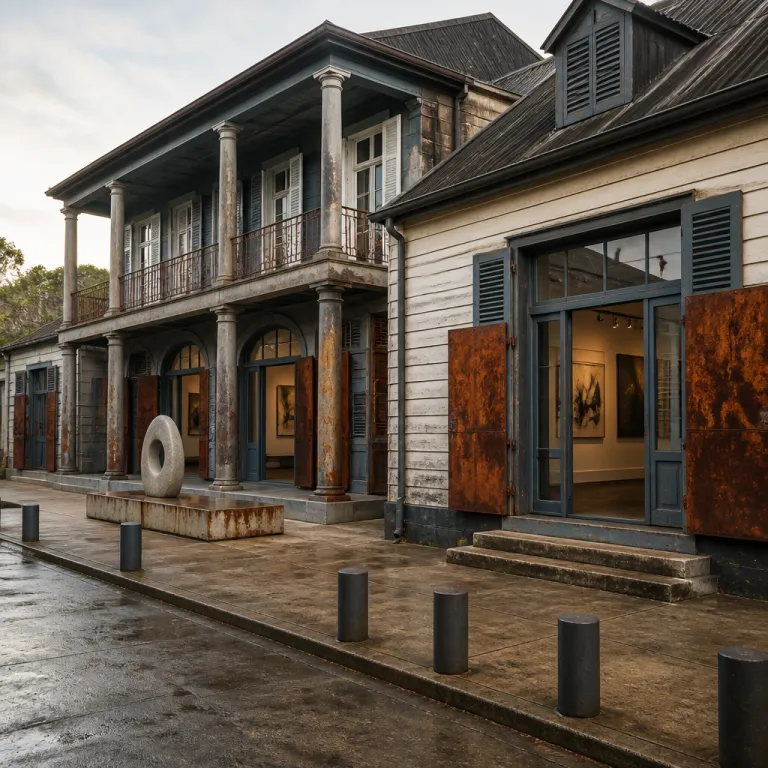
The story begins with the city itself, where colonial wooden houses, cast-iron balconies and national monuments form a living gallery of architecture. These 19th- and early 20th-century residences once housed administrators of the wider Caribbean and even traders bound for the Dominican Republic, and today they shelter a new generation of artists, curators and cultural organizations shaping a confident Guyanese culture. Walking between each art gallery, you feel how the work on the walls converses with the streets outside, from African-inspired fretwork to Indigenous motifs carved into weathered facades.
For luxury travelers using a premium hotel booking website focused on Guyana national highlights, this cultural density matters. You can land in Georgetown, check into a riverside suite, and within minutes be standing in front of a drawing by Aubrey Williams or a sculptural installation by Hew Locke that reframes the Caribbean in global terms. The capital’s creative scene is not a sideshow to rainforest adventures; it is the lens that explains how Indigenous peoples, African descendants and European settlers all left marks on the city’s design and its arts.
Castellani House and the national gallery at the heart of Guyanese art
Any serious exploration of art in Guyana begins at Castellani House, the 19th-century residence designed by architect Cesar Castellani for the colonial government botanist George Samuel Jenman. Construction began in the 1870s and the building was completed in the late 19th century, according to the National Gallery of Art and Guyanese cultural authorities. This gingerbread structure, now home to the National Gallery of Art, anchors Georgetown’s cultural life with a permanent collection of several hundred works that trace Guyanese art from early landscape painting to bold abstract pieces. The building’s wraparound verandas and steep roofs show how colonial design adapted to Guyana’s equatorial climate, while the galleries inside reveal how local artists adapted global movements to Caribbean realities.
Within these rooms you encounter painting and drawing that speak directly to the country’s layered identity. Aubrey Williams, perhaps the most internationally recognized Guyanese artist, fuses Indigenous cosmology, European modernism and African symbolism into canvases that feel both Caribbean and cosmic, and his work sits alongside pieces by local artists who explore themes from sugar estates to urban social media culture. Exhibitions often highlight Indigenous peoples from the interior, giving space to weaving, ceramics and fine art carving that challenge narrow definitions of gallery art in the Caribbean.
Plan at least ninety minutes here, ideally with a guide who can unpack how the national gallery evolved from a colonial residence into a flagship for design in Guyana and contemporary arts. Castellani House stands on Vlissengen Road, Georgetown (approximate coordinates 6.8095° N, 58.1490° W), usually open Monday to Friday during standard office hours with free or low-cost admission; visitors should confirm current opening times and any fees directly with the gallery or tourism offices. Couples heading onward to Kaieteur Falls can pair this visit with a curated itinerary from a luxury base in the capital, using resources such as the guide to planning refined trips to Kaieteur Falls from Georgetown. Time spent at Castellani House becomes the intellectual prologue to the rainforest, grounding your sense of place before you trade galleries for gorges and staircases for canyon rims.
Walter Roth Museum and Indigenous narratives in the capital
A short walk or quick taxi from Castellani House brings you to the Walter Roth Museum of Anthropology, a compact institution that quietly reshapes how visitors understand Guyana’s national identity. Named for anthropologist Walter Edmund Roth, the museum was established in 1974 and opened to the public in 1982, according to official museum documentation and Guyana’s Department of Culture. It focuses on the material culture of Indigenous peoples from Guyana’s interior, displaying tools, ritual objects and everyday items that predate both colonial and Caribbean eras. In a city defined visually by historic architecture, this space ensures that Indigenous history is not relegated to the rainforest alone.
Exhibits here complement the broader art story told at the national gallery by foregrounding the design intelligence embedded in traditional crafts. Basketry patterns echo motifs you will later notice in contemporary painting, while ceremonial objects reveal how Indigenous artists used natural pigments and drawing techniques long before European fine art arrived. For couples interested in thoughtful luxury, this is where Georgetown’s creative life intersects with anthropology, and where the work of Indigenous artists is treated with the same curatorial care as any gallery art in the wider Caribbean.
The museum occupies a wooden building on Main Street, Georgetown (approximate coordinates 6.8120° N, 58.1630° W), typically open on weekdays with modest or no admission charges; visitors are advised to verify current hours, ticket policies and contact details through local tourism information before arrival. The institution also participates in educational programs that feed into the broader Georgetown art trail, using maps, brochures and occasional audio guides to connect visitors with other cultural sites. When you later stand at Kaieteur’s edge after following a luxury waterfall itinerary in Guyana, the objects you saw at Walter Roth give context to the Indigenous guides who lead you along the forest paths. In this sense, the capital’s art and museum culture is not confined to galleries; it is a continuum that stretches from vitrines to river landings and savannah lodges.
Street art, colonial shells and emerging galleries in Georgetown
Step back into the tropical light and Georgetown’s streets themselves become an open-air gallery, where murals and informal street art reinterpret the city’s historic wooden houses. Around downtown, walls that once carried only political posters now host painting and drawing that reference African heritage, Guyanese folklore and even the Caribbean-wide migrations that link Guyana to the Dominican Republic and other islands. This is the city’s visual culture at its most immediate, unmediated by white cubes yet deeply connected to the same artists who show in formal spaces.
Several emerging galleries occupy restored timber residences, their fretworked balconies framing views of the city’s cathedral spires and palm-lined avenues. Inside, you might find a mixed-media work by a young artist influenced by Aubrey Williams hanging near a sculptural installation that nods to Hew Locke’s explorations of empire and trade, both artists using Caribbean visual language to interrogate global histories. These spaces often double as design studios, where furniture, textiles and ceramics blur the line between applied arts and gallery art, and where local artists test how Guyanese creativity can live in contemporary homes and hotels.
For couples staying at a riverside property or a refined island retreat such as the one profiled in this guide to an island retreat for elevated escapes in Guyana, these galleries offer acquisition opportunities that support the city’s creative economy. Many artists maintain active social media profiles, making it easy to follow their work after you leave Georgetown and to commission pieces that reflect your own journey through Guyana’s national parks and interior lodges. The interplay between wooden architecture, contemporary arts and digital visibility is what makes the capital’s cultural scene feel both rooted and restlessly current.
Designing a one day walking route through Georgetown Guyana art culture
With only one full day in the capital, structure your route to balance depth with ease, especially in the tropical heat. Start mid-morning at Castellani House, when the light on the façade is soft and the national gallery is still quiet enough to contemplate major works by Aubrey Williams and other Guyanese artists. From there, a shaded walk or short ride takes you to the Walter Roth Museum, where the focus on Indigenous peoples rounds out your understanding of Guyana’s cultural foundations.
After a lunch stop in a nearby café or hotel restaurant, head downtown to explore street art and smaller galleries that showcase both fine art and design objects. Look for spaces that highlight local artists working across painting, drawing and sculpture, and pay attention to how African and Caribbean motifs appear in everything from jewelry to furniture design. This is where Georgetown’s art culture becomes tactile, inviting you to handle ceramics, textiles and other work that could easily transition from gallery walls to your own home.
Late afternoon is ideal for a slow loop through the city’s historic core, where you can photograph verandas, churches and civic buildings that once anchored British rule across parts of the Caribbean. Many of these structures now host cultural organizations, educational programs and occasional pop-up art events, demonstrating how Georgetown has repurposed its older building stock for contemporary arts. By early evening, you will have walked a compact but dense circuit that threads together national institutions, Indigenous narratives and the everyday creativity of Guyanese culture.
Evening arts, music and theatre for luxury minded couples
As the equatorial sun drops, Georgetown’s art culture shifts from galleries to stages, courtyards and intimate hotel lounges. While the city does not yet offer the dense theatre districts of larger Caribbean capitals, a growing calendar of performances, readings and live music reflects the same multi-ethnic Guyanese culture you encountered in daytime exhibitions. Couples who value atmosphere as much as programming will find that the right venue can turn a simple recital into a memorable night.
Look for events that weave together African drumming, Indian classical influences and Caribbean rhythms, often staged in repurposed colonial halls or open-air patios. Some cultural organizations collaborate with local artists to project gallery art or digital drawing onto walls during concerts, creating immersive environments where painting, music and performance intersect. This cross-disciplinary approach mirrors the work of figures like Hew Locke, whose practice blurs sculpture, installation and political commentary, and it keeps Georgetown’s creative community firmly plugged into global conversations.
For a quieter evening, consider a hotel bar known for its design accents, where curated Guyanese art hangs above polished hardwood and staff can speak knowledgeably about the artists. Here, social media becomes a bridge rather than a distraction, allowing you to follow the careers of the creators whose work surrounds your table. Ending the day this way, with a final drink under ceiling fans and a view of historic silhouettes, reinforces how seamlessly arts and hospitality now intertwine in Guyana’s national capital.
How Georgetown’s arts scene reflects Guyana’s multi ethnic identity
What sets Georgetown’s art culture apart from many Caribbean cities is the clarity with which it expresses a genuinely multi-ethnic society. In a single day you move from Indigenous artifacts at the Walter Roth Museum to African-inspired sculpture, from European-influenced colonial painting to contemporary Guyanese art that references migration to the Dominican Republic and other Caribbean islands. Each gallery, museum and mural becomes a chapter in a national narrative that refuses to flatten difference into a single regional stereotype.
Artists and curators in Georgetown are acutely aware of this responsibility, and their work often engages directly with questions of identity, land and memory. At the national gallery in Castellani House, curatorial texts explain how artists like Aubrey Williams negotiated their relationships with both Guyana and the wider Caribbean, while younger local artists use drawing, photography and installation to address topics from climate change to social media activism. Even the choice to house these institutions in former administrative buildings is deliberate, turning symbols of empire into platforms for Guyanese culture and rights reserved for communities once marginalized.
This layered context is part of what makes Georgetown an essential stop for travelers who care about more than room size and thread count. A luxury stay in the capital, booked through a premium Guyana-focused platform, becomes a gateway to understanding how art in Guyana, design in Guyana and the broader arts ecosystem support both tourism and cultural resilience. As one official-style description neatly summarizes, “What is the Castellani House? A 19th-century building housing Guyana's National Art Gallery. Who was Walter Roth? An anthropologist; museum named after him. What can I see on the Georgetown Art Trail? Historic buildings, art galleries, and museums.”
Key figures shaping the Georgetown art trail
- Castellani House holds a substantial collection of national artworks, making it one of the largest single concentrations of Guyanese art in the capital (based on public museum reporting and curatorial notes).
- The Walter Roth Museum was established in 1974 and opened to the public in 1982, several years after its founding, marking a pivotal moment in the formal recognition of Indigenous peoples’ material culture in Georgetown.
- Castellani House was completed in the late 19th century, placing it firmly within the period when Georgetown served as an administrative hub for parts of the wider Caribbean.
- The Georgetown art trail operates year-round, which allows travelers using luxury hotel bases to integrate at least one major cultural stop into even short one or two night stays.
- Guided and self-guided methods, supported by maps, brochures and occasional audio guides, have increased visitor engagement and contributed to measurable growth in cultural tourism to Guyana’s capital.
Frequently asked questions about the Georgetown art trail
What is the Castellani House and why is it important ?
Castellani House is a 19th-century wooden residence designed by architect Cesar Castellani that now houses Guyana’s national art gallery. Its importance lies both in the architecture, which showcases colonial design adapted to the tropics, and in the collection of Guyanese art that spans painting, drawing and mixed media. For visitors, it is the single best place to understand how Georgetown’s art culture has evolved over more than a century.
What can I see on the Georgetown art trail in one day ?
In a single day you can visit Castellani House, the Walter Roth Museum of Anthropology and several smaller galleries and street art clusters in downtown Georgetown. This route offers a balanced view of Indigenous material culture, national fine art and contemporary work by local artists. It fits comfortably around a luxury hotel stay and still leaves time for dining and evening music.
Who was Walter Roth and what does his museum focus on ?
Walter Roth was an anthropologist whose research focused on the Indigenous peoples of Guyana and the wider region. The museum that bears his name in Georgetown presents artifacts, tools and ceremonial objects that document these communities’ histories and design traditions. It complements the national gallery by emphasizing anthropology and material culture rather than only fine art.
How does Georgetown’s art scene connect to trips into Guyana’s interior ?
Galleries and museums in Georgetown provide cultural context for the landscapes and communities you encounter in the interior. Exhibitions on Indigenous design, African heritage and colonial history help frame experiences at places like Kaieteur Falls or Rupununi lodges. Many travelers now plan at least one full art day in the capital before flying onward to remote destinations.
Are there guided tours available for the Georgetown art trail ?
Yes, both independent guides and cultural organizations offer structured tours that link Castellani House, the Walter Roth Museum and selected galleries. These tours often include background on architecture, artists and the evolution of Guyanese culture, and some provide printed maps or audio guides. For luxury travelers, private tours can be arranged through high-end hotels or specialized travel planners.
