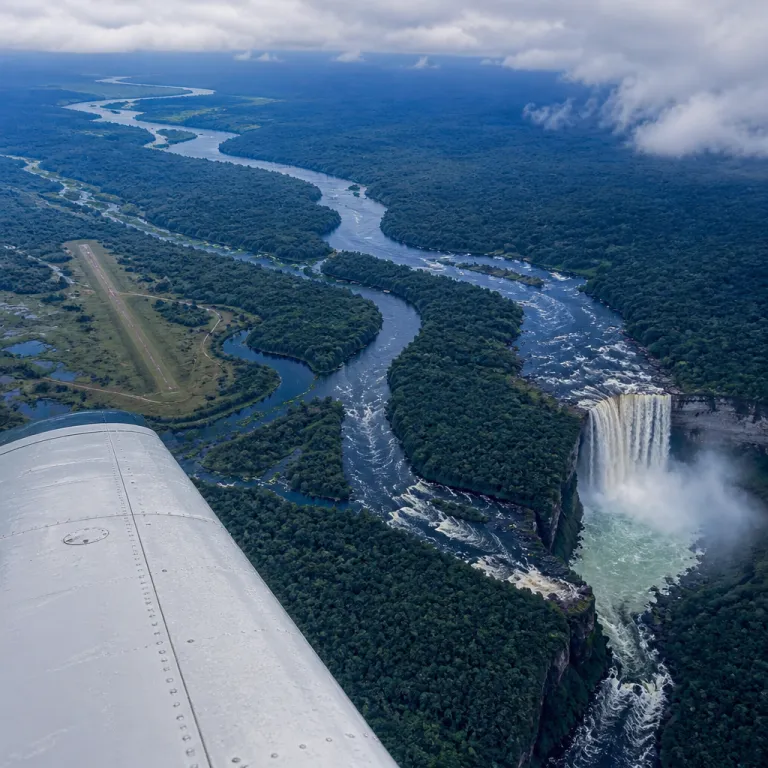
The two airport reality that shapes every luxury itinerary
Guyana internal flights dictate how your itinerary breathes, and nowhere is this clearer than in Georgetown’s two airport reality. Cheddi Jagan International Airport handles your long haul arrival, while Eugene Correia International Airport at Ogle quietly controls access to Kaieteur Falls, Orinduik Falls, Iwokrama and the Rupununi interior. For high end passengers who value time and comfort, understanding how these flights in Guyana connect the two hubs is the first serious planning step.
Most international passengers land at Cheddi Jagan International Airport, then transfer by road for 45 to 60 minutes to the smaller Eugene Correia International Airport on the coast. This drive between the international airport and Correia International can feel routine, yet for a business leisure traveler with a tight trip it is the hinge between a polished city hotel and a waiting aircraft on the apron. When you plan a trip that combines commercial long haul flights with domestic aviation, always check airline schedules on both sides before locking in your hotel bookings.
Courtyard by Marriott at Cheddi Jagan International Airport has become the practical overnight choice when international flights arrive late and Guyana internal flights depart early from Ogle. The property’s 150 rooms, reliable Wi Fi and quiet bar are not about spectacle, they are about ensuring you are rested before boarding a Cessna Caravan or Britten Norman Islander at Eugene Correia. For travelers using a luxury and premium hotel booking website focused on Guyana, this airport hotel often appears alongside Georgetown city properties because it solves a very specific aviation problem.
Once you reach Eugene Correia International Airport, the mood changes from long haul anonymity to small scale aviation intimacy. Here, Trans Guyana Airways, Roraima Airways, Gum Air and other airlines operate a mix of scheduled daily flights and charters that thread out to Kaieteur Falls, Orinduik Falls, Iwokrama and the Rupununi. The aircraft are compact, baggage allowance is strict and every kilogram matters, so your packing list should be shaped by aviation realities rather than hotel wardrobes.
At Ogle’s Correia International terminal, you will see Britten Norman Islander aircraft parked beside larger Cessna Caravans, both designed to handle short interior strips. These planes are the workhorses of flights in Guyana, carrying passengers, supplies and sometimes research teams into areas where roads simply do not exist. For luxury travelers, the real upgrade is not a bigger seat but a more direct flight that shortens the journey between a Georgetown suite and a riverfront lodge deep in the Iwokrama forest.
Because Guyana internal flights are so central to the experience, many premium lodges coordinate directly with airlines and charter operators. They will book flights with Trans Guyana Airways, Roraima Airways or Gum Air on your behalf, bundling aviation, transfers and accommodation into one itinerary. When you use a curated hotel booking platform, look for clear main content that explains whether flights are included, then focus on the aviation fine print rather than broad marketing language.
Choosing the right airline and aircraft for Kaieteur Falls
The day trip from Georgetown to Kaieteur Falls is the most iconic of all Guyana internal flights, and it is also the most misunderstood. Many travelers treat it as a simple excursion, yet for luxury guests the choice of airline, aircraft and schedule can define whether the falls feel crowded or almost private. On a premium booking website, the smartest itineraries pair this flight with a refined Georgetown hotel stay on either side.
From Eugene Correia International Airport, Trans Guyana Airways, Air Services Limited, Skywest Charter Service and other airlines operate flights to Kaieteur Falls using Cessna Caravans and Britten Norman Islander aircraft. These flights in Guyana usually take about one hour each way, with a low level pass over the Potaro River before landing on the plateau near the falls. Because the aircraft are small and the runway short, baggage allowance is tight, so passengers should travel with only a light daypack and leave larger baggage at their Georgetown hotel.
For a more exclusive experience, some travelers book a private charter flight to Kaieteur Falls instead of joining a mixed group. Charter flights can cost around 200 USD per person per leg when shared among a small group, which is a modest premium compared with the overall budget of a luxury trip. When you plan a trip that includes both Kaieteur Falls and a spa focused stay in the capital, pairing this charter with a refined property from a curated list of spa hotels in Guyana can create a balanced rhythm between wilderness and wellness.
Operationally, airlines such as Trans Guyana Airways, Roraima Airways and Gum Air run these flights as a hybrid between scheduled and charter services. Seats may be sold individually, yet the aircraft only operates when a minimum number of passengers is reached, which makes early booking essential during quieter travel periods. Because weather over the interior can shift quickly, especially near the falls, you should always check airline communication channels on the morning of your flight.
Kaieteur Falls itself is a protected area with very limited infrastructure, and there are almost no overnight options directly at the site. That reality makes the timing of Guyana internal flights critical, since your aircraft is both your arrival and your departure window. If low cloud or heavy rain threatens visibility, pilots may delay or cancel the flight, and luxury travelers should be mentally prepared for this kind of aviation led change in their trip.
Some itineraries combine Kaieteur Falls with Orinduik Falls on the same day, using the same aircraft to hop between the two sites. These combined flights in Guyana offer a striking contrast between Kaieteur’s vertical drama and Orinduik Falls’ terraced pools, yet they also stretch the day and can feel rushed if you value slow travel. When booking through a premium platform, look for clear notes in the main content about whether your flight includes both falls, and pay close attention to operational details about timing, baggage and aircraft type.
Iwokrama and the Rupununi: reading the route map from Ogle
Once you move beyond Kaieteur, Guyana internal flights become the backbone of any serious journey into Iwokrama and the Rupununi. From Eugene Correia International Airport, airlines such as Trans Guyana Airways, Roraima Airways, Gum Air and Skywest Charter Service operate flights to Lethem, Annai and other small strips that serve lodges and Amerindian communities. These flights in Guyana are not just transport, they are the logistical spine that connects your Georgetown hotel to river lodges, savannah ranches and canopy walkways.
The core route for many travelers is the flight from Georgetown to Lethem, which typically takes about 85 minutes depending on weather and aircraft type. This route is usually operated by Trans Guyana Airways or other airlines using Cessna Caravans or Britten Norman Islander aircraft, with some flights stopping at Annai or Surama on the way. Because the aircraft are small and the airstrips basic, baggage allowance is usually around 9 to 11 kilograms per person, so passengers should check airline rules carefully before finalizing what they pack for the trip.
Iwokrama itself is reached via airstrips such as Fair View, which may be served by charter flights rather than daily flights on a fixed schedule. Air Services Limited and other aviation partners often handle these charters, coordinating closely with lodges like Iwokrama River Lodge to align aircraft movements with boat transfers and guided activities. When you plan a trip that includes multiple interior stays, a region by region overview such as a hotel guide from Georgetown to the deep interior helps you match specific airstrips with the right properties.
For the Rupununi, Lethem acts as the main aviation gateway, with flights in Guyana linking it to Georgetown and sometimes to smaller strips by charter. From Lethem, travelers disperse by 4x4 or boat to ranches and lodges across the savannah, which means your arrival flight time directly affects how comfortably you reach your final hotel. If your commercial long haul flight into Guyana arrives late, it is often wiser to overnight in Georgetown and take a morning flight to Lethem rather than risk a rushed same day connection.
Norman Islander and Britten Norman aircraft are particularly well suited to the short, sometimes soft strips that serve Rupununi properties. These planes are not luxurious in the conventional sense, yet for a traveler who values access over amenity, they are the key to reaching some of the most remote high end lodges in South America. When browsing a luxury booking website, pay attention to whether a property is served by scheduled flights, charter only aviation or a mix of both, because this will shape both your budget and your flexibility.
Because interior weather can change quickly, especially in the wet season, flights in Guyana to Iwokrama and the Rupununi are more vulnerable to delays than the Georgetown to Lethem trunk route. A good hotel booking platform will flag this in the main content, encouraging you to build buffer nights in Georgetown at the start or end of your trip. If you prefer concise, operational detail, look for sections that explain how the lodge handles denied boarding, weather cancellations and rebooking on later flights.
Cost, baggage allowance and the real price of flexibility
For many luxury travelers, the most surprising aspect of Guyana internal flights is not the aircraft size but the cost structure. Charter aviation into Kaieteur Falls, Iwokrama and the Rupununi is priced per aircraft or per seat, and the numbers can look high when compared with commercial tickets in larger countries. Yet when you consider the remoteness of the airstrips, the limited number of passengers and the maintenance demands on each aircraft, the economics of flights in Guyana start to make sense.
As a reference point, charter flights to Kaieteur Falls often work out at around 200 USD per person per leg when shared among a small group, though exact figures vary by operator and season and should be treated as approximate. Routes to Iwokrama or the Rupununi can be similar or higher, depending on distance, aircraft type and whether you are booking a full charter or buying individual seats on a scheduled service. For travelers using a premium hotel booking website, the key is to check whether interior flights are bundled into the lodge rate or itemized separately, because this changes how you compare properties.
Baggage allowance is another non negotiable factor on Guyana internal flights, and it is usually much lower than on international airlines. Most operators set limits around 9 to 11 kilograms per person for checked baggage, sometimes with a small additional allowance for hand baggage, and they may weigh both passengers and bags before boarding. If you arrive from an international flight with multiple suitcases, you will need to leave excess baggage at your Georgetown hotel or with the airline, so always check airline policies in advance.
Because aircraft such as the Britten Norman Islander and Cessna Caravan operate close to performance limits on short strips, strict baggage allowance rules are a safety measure rather than a revenue tactic. Pilots must balance fuel, passengers and baggage for each flight, especially on hot days or when runways are wet, and overloading is simply not an option. Luxury travelers who are used to generous baggage policies on long haul airlines should adjust expectations and pack for function rather than variety.
Flexibility has a price in this environment, and it usually comes in the form of private charters or semi private flights. Booking a full aircraft with Trans Guyana Airways, Roraima Airways, Gum Air or Skywest Charter Service allows you to set departure times, route combinations and even photo oriented flight paths over features such as Kaieteur Falls or Orinduik Falls. For a group of four to six passengers staying at high end lodges, the per person cost of such a charter can be reasonable when weighed against the value of a tailored itinerary.
When you plan a trip that mixes business meetings in Georgetown with leisure time in the interior, the ability to adjust flight times can be worth the premium. A private charter can depart Eugene Correia International Airport after a morning meeting, land at an interior strip in time for a late lunch and still have you back in the capital for an evening flight the next day. On a well designed booking platform, the main content should spell out these options clearly so you can focus on the operational levers that matter to your schedule.
How and where to book: airlines, agents and lodge packages
Booking Guyana internal flights is not a one click exercise, and that is precisely why a specialist hotel platform earns its keep. You are dealing with a small aviation ecosystem where Trans Guyana Airways, Roraima Airways, Gum Air, Air Services Limited and Skywest Charter Service each control different routes and aircraft. The smartest approach is to decide your interior lodges first, then shape flights in Guyana around those fixed points rather than the other way around.
There are three main ways to book these flights, and each suits a different style of traveler. The first is to let your lodge or tour operator handle everything, bundling flights, transfers and accommodation into a single package that appears as one line on your invoice. This approach works well for passengers who value simplicity and are comfortable trusting the lodge’s preferred airline partners for each flight.
The second route is to work with a Georgetown based travel agency that understands both aviation and hospitality. These agents can book seats on scheduled flights with Trans Guyana Airways, Roraima Airways or Gum Air, arrange charters with Air Services Limited or Skywest Charter Service and align everything with your hotel reservations in the capital. For business leisure travelers who need to mesh interior trips with fixed meeting dates, this human layer between you and the airlines can be invaluable.
The third option is to book directly with the airlines, using their websites, email or phone channels. This is more hands on, and it requires you to check airline schedules, baggage rules and payment terms yourself, but it can offer more control if you are comfortable managing the details. When using a luxury hotel booking website, look for clear links or references to the relevant airlines in the main content, and do not hesitate to prioritize practical booking guidance over decorative copy.
Because road access to many interior regions is limited or seasonal, aviation is not just convenient, it is often the only realistic way to reach certain lodges. This context explains why flights in Guyana can feel more like private logistics than public transport, and why denied boarding due to weight limits or weather is handled with a different mindset than on large commercial airlines. A good platform will explain these nuances openly, helping you set expectations before you book.
Official guidance from local operators reinforces this practical approach to booking. As one set of expert answers puts it, “How do I book a charter flight from Georgetown to Kaieteur Falls? Contact local airlines like Skywest or Air Services Limited directly. What is the flight duration from Georgetown to Lethem? Approximately 85 minutes, depending on weather conditions. Are there weight limits for baggage on these flights? Yes, weight restrictions apply; confirm with the airline before booking.” These statements align closely with what seasoned travelers experience on the ground, and they underline why early communication with airlines is essential.
Weather, wet season timing and building aviation into your hotel strategy
Weather is the quiet variable that shapes Guyana internal flights more than any timetable printed on a website. In the wet season, heavy showers and low cloud can roll across the interior with little warning, forcing pilots to delay or cancel flights in Guyana for safety reasons. For a luxury traveler who has just checked out of a Georgetown hotel and is ready to board, this can feel disruptive unless it was anticipated in the trip design.
The most effective way to manage this uncertainty is to build buffers into your itinerary, especially around key aviation legs. Arriving in Georgetown at least one night before your first interior flight gives you room to absorb an international delay without missing a charter to Kaieteur Falls, Iwokrama or the Rupununi. Similarly, planning a final night in the capital after your last interior flight protects your onward commercial connection from any weather related disruption.
Seasonal timing also matters, and patient travelers are often rewarded when they lean into the rhythms of the wet season rather than avoiding it entirely. For a deeper look at how this plays out on the ground, a planning focused piece such as why the start of the wet season quietly rewards patient travelers offers useful context that goes beyond aviation. When you plan a trip that includes both city hotels and remote lodges, aligning your dates with these seasonal patterns can mean softer light over Kaieteur Falls, greener savannah in the Rupununi and cooler nights at Iwokrama.
Denied boarding due to weight or weather is handled differently in this small scale aviation world than on large commercial airlines. Operators such as Trans Guyana Airways, Roraima Airways, Gum Air and Air Services Limited will usually prioritize safety and operational feasibility over rigid adherence to a timetable, which can mean last minute reshuffles of passengers or baggage. A good hotel booking platform will explain these realities in the main content, encouraging you to carry essential medication and valuables in your hand baggage and to keep your schedule flexible.
From a hospitality perspective, the smartest properties in Georgetown and the interior now design their service around these aviation uncertainties. City hotels near Eugene Correia International Airport or in central Georgetown are used to early check outs for dawn flights and late arrivals after weather delays, and many will store baggage for guests who are heading into the interior with only a small bag. Interior lodges, meanwhile, often build flexible activity schedules that can absorb late arrivals without compromising the overall experience.
For business leisure travelers, the key is to treat Guyana internal flights as a central design element rather than a background detail. Your choice of airline, aircraft, departure time and even season will shape not only how you move between Georgetown and the interior, but also which hotels make sense at each stage of the trip. When you approach aviation and accommodation as a single integrated system, the result is a smoother, more resilient journey that does justice to both the country’s wild interior and its emerging luxury hospitality scene.
Key figures and practical statistics for Guyana internal flights
- The flight duration from Georgetown to Lethem is approximately 85 minutes, which makes it a realistic same day connection after a morning checkout from a Georgetown hotel.
- Typical charter flight costs to interior destinations such as Kaieteur Falls start around 200 USD per person per leg when seats are shared among a small group, a figure that helps frame the aviation share of a luxury trip budget.
- Most interior flights in Guyana operate with baggage allowance limits of roughly 9 to 11 kilograms per person, significantly lower than international airline norms and a key factor in packing decisions.
- The road transfer between Cheddi Jagan International Airport and Eugene Correia International Airport usually takes 45 to 60 minutes, which should be built into any same day connection planning between international and domestic flights.
- Aircraft commonly used on Guyana internal flights, such as the Britten Norman Islander and Cessna Caravan, typically carry between 8 and 14 passengers, which explains both the intimate feel on board and the sensitivity to weight and weather.
FAQ about Guyana internal flights for luxury travelers
How do I book a charter flight from Georgetown to Kaieteur Falls ?
The most direct way is to contact local airlines such as Skywest Charter Service or Air Services Limited, which both operate charters from Eugene Correia International Airport to Kaieteur Falls. Many high end lodges and specialist travel agencies in Georgetown can also arrange these flights as part of a wider itinerary. If you are using a luxury hotel booking website, check whether aviation is bundled into the package or needs to be booked separately.
What is the typical baggage allowance on Guyana internal flights ?
Most operators set baggage allowance limits around 9 to 11 kilograms per person for checked baggage, sometimes with a small additional allowance for hand baggage. Because aircraft such as the Britten Norman Islander and Cessna Caravan operate from short interior strips, these limits are enforced strictly for safety reasons. Travelers arriving with larger international baggage should plan to store excess items at their Georgetown hotel or with the airline.
Can I connect directly from my international flight to an interior flight on the same day ?
Same day connections are sometimes possible, but they require careful planning because international flights arrive at Cheddi Jagan International Airport while domestic flights depart from Eugene Correia International Airport. The road transfer between the two airports usually takes 45 to 60 minutes, and interior flights may leave early in the day, especially to Kaieteur Falls or the Rupununi. Many luxury travelers choose to overnight in Georgetown or at the Courtyard by Marriott near Cheddi Jagan to reduce stress and protect against delays.
What happens if my interior flight is delayed or cancelled due to weather ?
In the event of poor visibility, heavy rain or unsafe conditions, airlines such as Trans Guyana Airways, Roraima Airways, Gum Air and Air Services Limited may delay or cancel flights for safety reasons. They will usually rebook passengers on the next available flight, but options can be limited when aircraft and crews are already committed to other routes. Building buffer nights into your hotel itinerary in Georgetown and the interior is the most reliable way to absorb these disruptions without compromising your overall trip.
Are Guyana internal flights suitable for business travelers on tight schedules ?
They can be, provided you design your itinerary around the realities of small scale aviation rather than trying to force it into a rigid timetable. Private or semi private charters with operators such as Trans Guyana Airways, Roraima Airways, Gum Air or Skywest Charter Service offer the greatest control over departure times and routing. For executives extending a business trip into leisure, combining flexible flight options with strategically located hotels near Georgetown and key interior airstrips delivers the best balance between efficiency and experience.