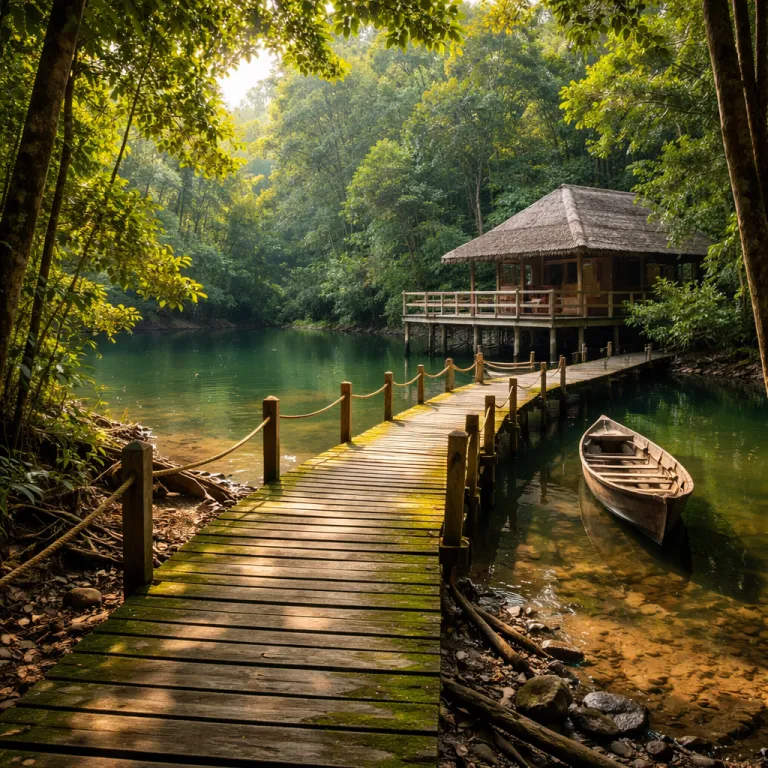
Resort Guyana: Iwokrama’s award and what it means for luxury travelers
Resort Guyana conversations shifted decisively when Iwokrama River Lodge was named Accommodation Provider of the Year by the Guyana Tourism Authority in November 2023, a prize that weighs conservation results and Indigenous partnerships more heavily than star ratings. According to the GTA’s official award announcement, the citation highlighted Iwokrama’s “exemplary collaboration with local communities and measurable biodiversity outcomes,” a standard that matters when you are comparing one luxury hotel or hotel resort to another. For travelers weighing premium rooms and rooms suites, that award signals a property where your room fee directly supports rainforest science, Amerindian ranger salaries, and the protection of a corridor that still shelters jaguar, giant otter, and harpy eagle in near solitude. In a market where high end stays in Georgetown can blur together, this lodge’s mix of nature immersion, measured comfort luxury, and serious conservation work offers perfect alignment for travelers who care where their money goes and want their choice of Guyana lodges to have real impact.
The resort Guyana landscape is broader than Iwokrama, of course, with Hurakabra River Resort, Baganara Island Resort, Jubilee Resort, Splashmins Fun Park and Resort, and Mainstay Lake Resort all offering different activities and amenities along the Essequibo and Demerara rivers. Yet none of these resort options combine a protected forest the size of a small European country, a canopy walkway, and a research center in one integrated experience, which is why the GTA accolade matters more here than a stack of online hotel reviews. Iwokrama’s monitoring team, for example, has logged more than 70 individual jaguars along the corridor since systematic camera trapping began in 2012, a figure reported in internal monitoring summaries and GTA briefing notes, and a reminder that this is still functioning big cat habitat rather than a token green buffer. For discerning persons planning a trip, that means you should book early, treat the award as a quality filter rather than marketing, and then decide whether you want a river focused stay, a more corporate friendly conference setting, or a wilderness lodge where the standard of luxury is measured in wildlife sightings per night rather than thread count.
At Iwokrama, eight river facing cabins function more like a refined eco hotel than a rustic camp, each standard room offering a proper bed, en suite bathroom, mosquito netting, and a hammock on the verandah for a slow afternoon room view over the Essequibo. Power is solar, fans replace air conditioning, and modern amenities are deliberately limited to what you actually need in the rainforest, which means you trade a plunge pool and minibar for silence, stars, and the sound of Kurupukari Falls in the distance. One Makushi ranger summed it up during a recent GTA site visit: “Guests come for comfort, but they stay for the forest — if the forest is healthy, the lodge is successful.” For travelers used to a city luxury hotel, it is a recalibration of what comfort luxury means in Guyana, but the GTA’s rights reserved style criteria — conservation outcomes, community benefit, and guest feedback — suggest that this is exactly the kind of resort Guyana should be building more of, not fewer. When you are ready to move from research to action, the most reliable next step is to contact Iwokrama River Lodge or your preferred tour operator directly by phone or email, request current rates and availability, and then lock in dates before building the rest of your itinerary around that booking.
A realistic guest day at Iwokrama: from canopy walkway to Turtle Mountain
Resort Guyana marketing often leans on generic jungle imagery, but a day at Iwokrama River Lodge follows a precise rhythm that matters when you are choosing where to book your hotel. You wake around 04:30, step from your room into the dark, and by 05:00 you are on the river with an Amerindian guide, scanning for caiman eyeshine and listening as the forest shifts from night to first light while macaws, toucans, and the occasional harpy eagle call overhead. Breakfast back at the lodge is simple but well executed, and the staff quietly check that every family, solo explorer, and small corporate group has the right activities lined up for the day before anyone heads back to their rooms to grab binoculars and water bottles.
By mid morning, most guests are on the canopy walkway, a 30 to 40 mins drive from the hotel resort through forest that still feels largely untouched, and this is where the resort Guyana promise of nature immersion becomes very real. You climb to platforms suspended around 30 metres above the forest floor, watching mixed flocks move through the canopy while your guide points out petroglyph sites and explains how the Iwokrama team monitors jaguar movements along the corridor. The lodge reports average occupancy of around 60 to 70 percent in peak months, a figure shared in recent GTA tourism briefings, which keeps group sizes small enough that guides can tailor walks to birders, photographers, or first time rainforest visitors. Lunch is usually served back at the main building, a simple structure that functions as both dining room and informal lounge, where persons compare room view photos, trade bird lists, and quietly appreciate that the amenities here are designed around experience rather than spectacle.
The afternoon often means the Turtle Mountain hike, a half day adventure that starts with a short boat ride and then a steady climb through dense forest, where the humidity reminds you why fans, not air conditioning, make more sense in a standard room here. From the summit, the panorama over the Essequibo and endless green ridges is the kind of room view you cannot buy in any city luxury hotel, and it reframes what resort Guyana can mean for travelers who usually default to Caribbean beaches. Back at the lodge by late afternoon, some guests head straight for a hammock while others cool off at the river edge, and by night the focus shifts to spotlighting for wildlife or simply enjoying the quiet, a different kind of pool of darkness and sound that offers perfect conditions for deep sleep after a long day.
For travelers who want a more urban counterpoint to this wilderness, pairing Iwokrama with a refined heritage stay in Georgetown works well, and properties such as Herdmanston Lodge — profiled in our guide to refined heritage stays in Guyana — provide the kind of rooms suites, modern amenities, and corporate friendly meeting spaces that balance the lodge’s deliberate simplicity. In the capital, you will find a more conventional hotel experience with air conditioned rooms, a proper pool, and a wider range of dining options, which can be welcome after several nights of early starts and long hikes. This city and forest combination is where resort Guyana itineraries really shine, especially for solo travelers who want both adventure and a few nights of classic comfort luxury before flying home.
Planning a Rupununi loop: logistics, lead times, and combining top resorts
Resort Guyana planning becomes more strategic once you look beyond a single hotel and start mapping a full Rupununi loop that includes Iwokrama River Lodge, Karanambu Lodge, and Rewa Eco Lodge. Most travelers fly from Georgetown to Fair View airstrip on a scheduled or charter service operated by local carriers such as Trans Guyana Airways, a journey of roughly 60 to 90 mins depending on routing and intermediate stops, then transfer by vehicle for a short drive to the lodge, where staff greet you with a briefing that covers safety, activities, and what to expect from the rooms and amenities. From there, you can continue south by road or river to Karanambu for giant river otter encounters and then on to Rewa for arapaima filled lakes, creating an experience that moves from river focused adventure to savannah and then deep forest, all within one coherent itinerary that showcases some of the most respected Guyana lodges in the interior.
Premium lodges in the Rupununi typically range from about 280 to 450 US dollars per night, a rate that usually includes a standard room or cabin with a proper bed, most meals, guided activities, and transfers between nearby properties, which makes the overall value compelling when compared with many urban luxury hotel options. For resort Guyana travelers, the key is to book at least two to three months in advance, especially in the drier high season, because rooms at Iwokrama, Karanambu, and Rewa are limited and often held for small groups or repeat guests. These price and lead time ranges are consistent with figures shared by lodge managers and regional tour operators, and they underline why early planning matters. Shoulder season can be a smart strategy for solo explorers and couples, offering slightly cooler nights, fewer persons on shared excursions, and more flexibility to tailor your activities, though some trails and river sections may be wetter and require a bit more appetite for adventure.
Within this broader circuit, coastal properties such as Hurakabra River Resort and Baganara Island Resort add a softer resort Guyana element, with sandy river beaches, a more conventional pool in some cases, and a stronger focus on family stays or corporate retreats. Jubilee Resort, Splashmins Fun Park and Resort, and Mainstay Lake Resort sit closer to Georgetown and the Essequibo Coast, offering day trip style activities, water slides, and event spaces that appeal to local families as much as international visitors, which means weekends can feel lively and nights a little noisier than at remote wilderness lodges. When you are comparing these options, remember that “What are the top resorts in Guyana? Hurakabra River Resort, Baganara Island Resort, Jubilee Resort, Splashmins Fun Park and Resort, Mainstay Lake Resort.” and use that short list as a starting point, then refine based on whether you want deep nature immersion, easy access from the capital, or a setting that leans toward corporate events and conferences.
For travelers who care about the long term future of resort Guyana, it is worth reading the wider debate about how fast the lodge sector should grow, including our analysis of why Guyana should not become the next Costa Rica. Iwokrama’s recent accord with the Guyana Tourism Authority to promote Region 9, combined with its conservation track record, positions it as a model for how a hotel resort can balance guest comfort, Indigenous rights, and ecosystem protection without sliding into mass tourism. When you book, expect straightforward communication by phone and email rather than glossy apps, and remember that every reservation effectively votes for the version of resort Guyana you want to see in ten years, whether that is a chain of generic properties or a network of lodges where all rights reserved still means something for both travelers and the forest. The most practical way to support that vision is to confirm your dates with Iwokrama River Lodge or another Rupununi loop partner, secure flights to Fair View or Lethem, and then work with a trusted local operator to stitch those individual bookings into one seamless itinerary.